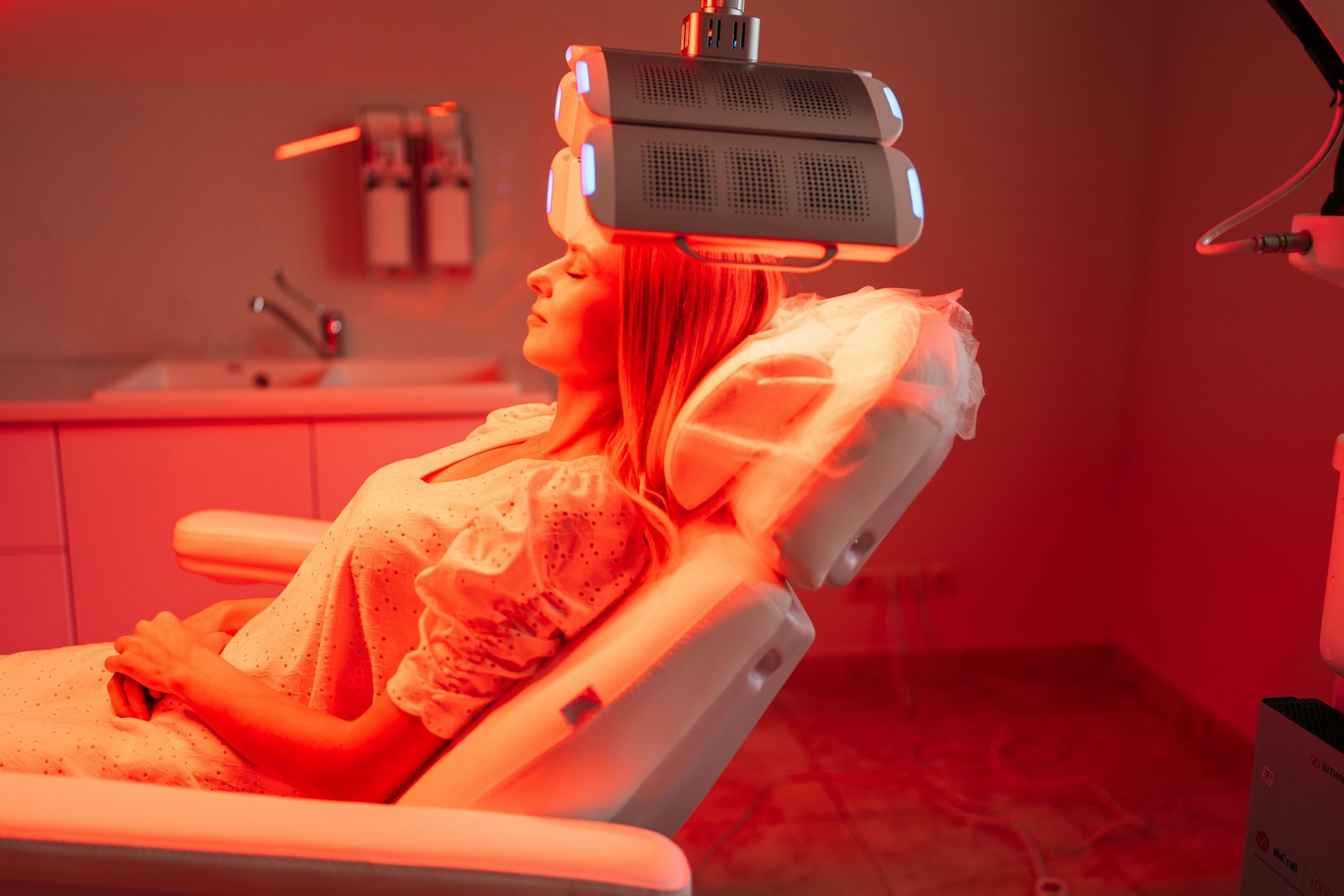
Red light therapy has moved from dermatology clinics into spas and living rooms. Here is a clear look at what it is, what it is claimed to do, and how much of that is supported by research so far.
What red light therapy is
Red light therapy uses low levels of red light on the skin. You may also see it called low-level laser light therapy or photobiomodulation. Red light sits in the visible part of the spectrum, not the ultraviolet range, so it is not a way to tan.
How it is thought to work
The leading explanation is that red light is absorbed by the mitochondria, the energy-producing parts of cells, which may help cells repair and renew. Claimed skin effects include stimulating collagen production, increasing the activity of fibroblasts (the cells that make collagen), improving circulation and reducing inflammation.
Photodynamic therapy is a different thing
You may read that red light is an established medical treatment. That usually refers to photodynamic therapy, where a light-sensitive medication is applied first and then activated with light. It is used by doctors for certain skin conditions and is not the same as sitting under a red light panel at a spa.
What the evidence looks like
Cleveland Clinic summarizes the current picture this way: studies so far show some potential for certain conditions, but more research is needed. Many published studies involved only a small number of people, did not include a placebo group, or were not carried out in humans at all.
That does not mean red light therapy does nothing. It means that strong, specific promises about results should be read with caution.
Safety
- Used short term and as directed, red light therapy appears to be safe, according to Cleveland Clinic.
- Misuse can damage the skin or the eyes if they are not protected, so use the eye protection supplied.
- Long-term safety is not yet known.
- At-home devices are generally considered safe to use but may be less powerful than the equipment used in clinics.
Questions to ask before you book or buy
- What specific result is this treatment meant to support, and what is the evidence for it?
- What eye protection is provided?
- How long is each session, and how often is it recommended?
- Is it suitable if I have a skin condition or take medication? Check with a doctor if you are unsure.